
Summary: What an AI-first financial platform tells us about the future of ERP competition.
Oracle NetSuite’s new free financial platform targets early-stage US technology startups. The larger question is what happens when an established ERP provider competes for customers before they need a full ERP.
On 14 October 2026, Oracle NetSuite announced QuickStart, a free, AI-first financial platform for eligible early-stage technology startups in the United States.
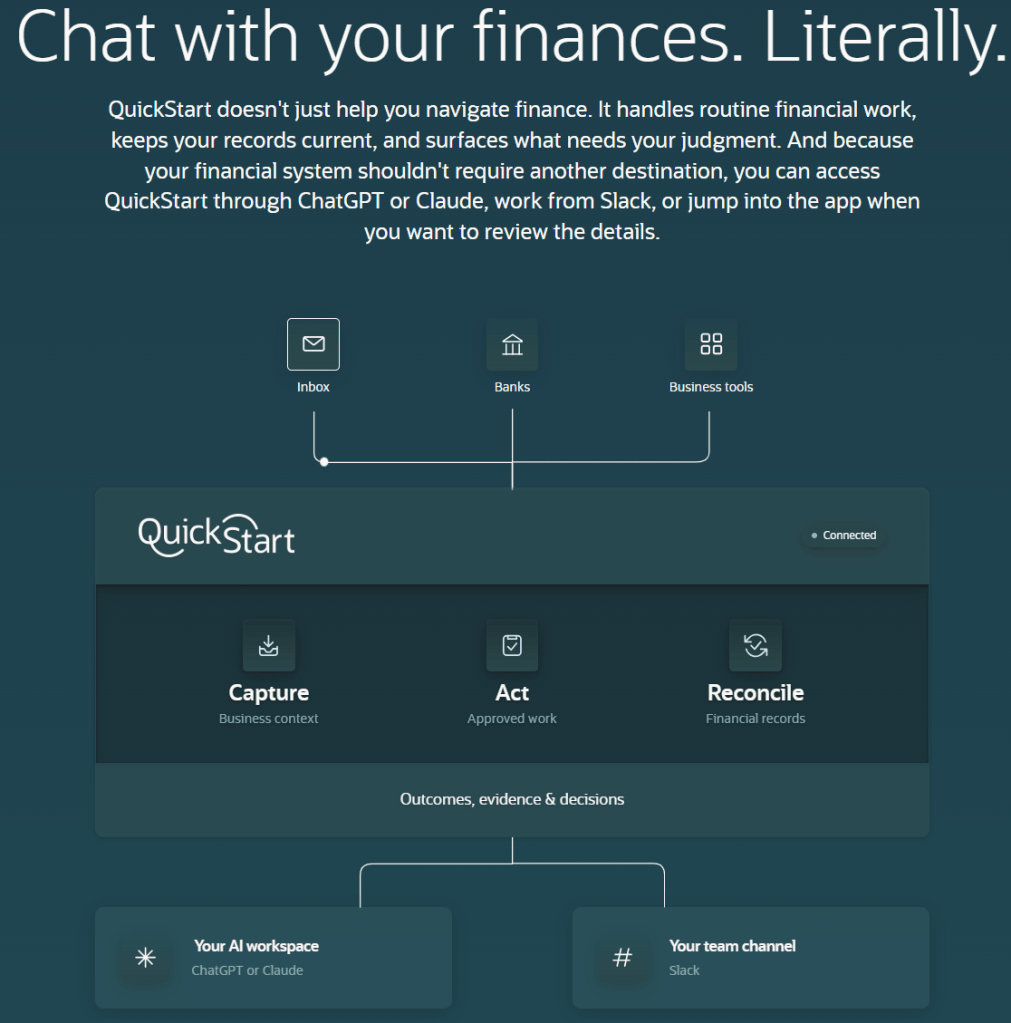
It combines accounting, banking, accounts payable and receivable, subscription management and startup financial metrics. Embedded AI is designed to automate routine finance work, while connections through the Model Context Protocol (MCP) allow users to work with their financial data through tools such as ChatGPT and Claude.
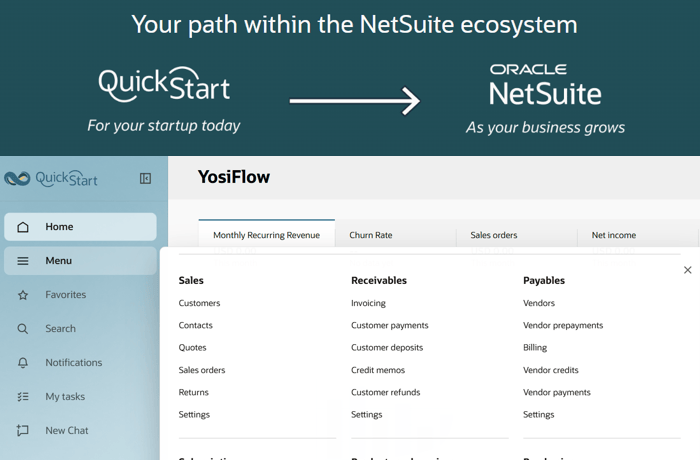
NetSuite says users can establish their financial operations in minutes, with a path into its broader platform as their business grows.
The announcement deserves attention beyond the startup market.
For years, ERP adoption has generally followed a familiar pattern. Businesses start with accounting software, add applications and spreadsheets as they grow, then consider an ERP when complexity, reporting requirements or operational inefficiencies justify the investment.
QuickStart challenges that sequence. For the ERP market, the timing and distribution strategy are worth examining.
1. NetSuite wants to meet customers earlier
The traditional journey for a growing business often begins with entry-level accounting software such as QuickBooks, Xero and modern AI-Native ERP alternative such as Campfire or DualEntry. As transaction volumes, reporting needs and operational complexity increase, the business evaluates a more capable financial system or ERP.
QuickStart creates another route.
NetSuite can engage an eligible startup before it has the budget, team or operational complexity associated with a conventional ERP implementation.
The free offer lowers the initial financial barrier. Self-service onboarding reduces the need for a traditional implementation process. The promised upgrade path gives customers a way to progress into the broader NetSuite ecosystem.
This creates a potential customer-acquisition advantage.
A startup that establishes its financial records and workflows in QuickStart may prefer to remain within the same ecosystem as its needs develop. That outcome is not guaranteed, and NetSuite has yet to publish conversion rates or the economics of supporting free users.
Nevertheless, the strategic intent is clear: build the relationship earlier in the business lifecycle.
2. Why would an enterprise software company offer this for free?
The free tier should be understood in the context of customer lifetime value.
An early-stage startup may generate little immediate revenue for an ERP vendor. As it grows, however, it may need additional users, stronger controls, more sophisticated reporting, integrations and broader operational capabilities.
If QuickStart can acquire customers at low cost and convert a proportion of them into paid NetSuite customers, the free platform could become an effective distribution channel.
The offer also allows NetSuite to compete for founders who might otherwise choose an AI-native finance platform or remain with a simpler accounting product.
The commercial model still needs to prove itself. Customer acquisition, support costs, usage limits and conversion into paid products will determine whether the strategy delivers attractive returns.
Free is the entry price. The long-term economics depend on what happens next.
3. AI is changing the relationship between users and ERP
QuickStart also reflects a broader shift in enterprise software.
Historically, people interacted with ERP systems through application screens, reports and predefined workflows. AI is introducing another interface: users can ask questions, analyse information and initiate actions through conversational tools.
MCP gives AI applications a standardised way to connect with external systems and their capabilities. In QuickStart, NetSuite is using this approach to make financial information accessible through tools including ChatGPT and Claude.
This raises an important question for ERP vendors: how much of the user’s experience needs to happen inside the ERP application?
The underlying system remains critical. Financial automation requires accurate records, permissions, business rules and reliable transaction processing. An AI interface does not remove those requirements.
In fact, the consequences of poor data and weak controls can become more significant when AI can initiate actions rather than simply produce summaries.
The competitive advantage may increasingly depend on the quality of the underlying data, the tasks the platform can execute and the controls governing those actions.
4. What does this mean for accounting software and AI-native competitors?
QuickStart creates a new consideration for providers serving early-stage technology businesses.
Accounting platforms compete on affordability, ease of use and the ability to support routine financial work. AI-native finance products are also competing to automate accounting tasks and give founders faster access to financial insight.
NetSuite now offers an alternative with a defined route into a broader ERP ecosystem.
That does not mean QuickStart is automatically superior to competing products. Its initial eligibility is restricted to qualifying US technology startups, and its free plan has usage limits. Businesses with multiple entities, international operations or more advanced control requirements may need a different solution.
The outcome will depend on product quality, usability, automation accuracy and the cost of growing with the platform.
For AI-native finance companies, the challenge is to establish differentiated value beyond capabilities that established software providers can introduce themselves.
5. Implications for NetSuite partners and consultants
The product also raises questions for the implementation ecosystem.
Self-service onboarding could reduce demand for some basic setup services in the startup segment. Partners may need to reconsider how they engage with businesses that can establish their initial financial system without a traditional implementation project.
At the same time, growing organisations still need finance architecture, integration design, data governance, internal controls and process improvement.
As AI takes on more routine work, advisors can help customers decide which processes to automate, where human approval remains necessary and how to measure the financial and operational results.
The opportunity is to connect technology adoption to business performance, rather than relying solely on implementation activity.
6. What we will be watching
At Yosipom, we work across finance transformation, NetSuite and AI-enabled operational improvement. QuickStart is relevant because it sits at the intersection of these disciplines.
We are testing the platform and will be watching three areas:
- Automation quality: How accurately does it process routine financial work for start-ups, and where is human intervention required?
- Control and usability: Can founders work efficiently while maintaining appropriate oversight of financial transactions?
- The growth path: How does the product support businesses as their financial and operational requirements become more complex?
These questions matter more than the headline price.
QuickStart is currently offered to eligible early-stage technology start-ups in the United States with tax and bank connectivity limited to the region. Its broader availability and commercial performance remain to be established.
The launch signals a serious attempt by NetSuite to compete earlier in the customer lifecycle while bringing AI closer to everyday financial work.
The published offer includes:
- Accounting, banking, accounts payable and receivable, payments and subscription management for US region.
- AI-assisted financial workflows and SaaS metrics.
- Up to five users, 2,500 new business records, 800 emails and 175 new documents per month.
- Connections to ChatGPT and Claude through MCP.
- A migration path into NetSuite as the company grows.
For the wider ERP market, the question is how established platforms and AI-native competitors will differentiate themselves as automation becomes an expected part of financial software. That is the development worth watching.
Source: Oracle NetSuite, NetSuite Introduces Free AI-First Financial Platform That Helps Startups Go From Idea to IPO, 14 October 2026. Further reading: NetSuite QuickStart
Yosipom’s commentary is based on the public announcement and early product testing. Observations about competitive strategy are our analysis, not claims about NetSuite’s undisclosed commercial economics.


